
COP29 Gender Day: A Call to Action for Climate Funders
COP29 has been billed as the “climate finance COP,” to mobilize resources that meet the magnitude of the escalating climate crisis. On COP29’s Gender Day, we share our insights about how these climate finance discussions square with resourcing and advancing gender equality ambitions alongside climate action.
What’s at stake at this year’s COP
COP decision-makers are grappling with defining a New Collective Quantified Goal (NCQG), a financial target regarding how climate finance flows to developing countries. There are a number of important aspects to consider (https://weadapt.org/knowledge-base/climate-finance/what-could-the-new-climate-finance-goal-look-like-7-elements-under-negotiation/) – from quantity to quality to measurement – made all the more important because of how previous financing commitments have fallen short. What is clear is the need to bring all possible resources to bear on a climate crisis whose impacts are already catastrophic, especially for women, girls, and gender expansive people.
This disproportionate impact underlines the urgency of another COP29 agenda item: the renewal of the Enhanced Lima Work Programme on Gender (https://unfccc.int/topics/gender/workstreams/the-enhanced-lima-work-programme-on-gender) and accompanying Gender Action Plan (https://unfccc.int/topics/gender/workstreams/the-gender-action-plan) (GAP). These commitments require climate action to respect and promote gender equality and women’s rights. However, if insufficiently financed, they will fall short. Concerningly, negotiations have stalled (https://www.bbc.com/news/articles/cdxvpl5zw19o).
Here at the Equality Fund, we know that climate justice and gender equality closely intersect, and therefore funding must reach women’s rights organizations (WROs) and feminist movements. They are key climate actors leading frontline adaptation and mitigation efforts and tackling the root causes of the climate crisis.
In advance of COP29, we published Funding our Future: Resourcing the feminist movements driving climate action with sister feminist fund Mama Cash. Our brief explains how WROs and feminist movements are indispensable climate actors, and offer a key mechanism for climate finance to reach them at scale through feminist funds.
How WROs and feminist movements combat the climate crisis
WROs and feminist movements are at the forefront of both adaptation and mitigation interventions, in many cases leading the “country-driven, gender-responsive, participatory and fully transparent approaches” encouraged by the UNFCCC’s Paris Agreement. They work on multiple issues that impact the daily lives and wellbeing of women, girls, and gender expansive people, with the climate crisis being one of the most harmful in many communities. They also seek to address the root causes of climate injustice: ideologies like patriarchy, capitalism and colonialism that perpetuate environmental extraction, exploitation, and destruction. The comparative advantage of this work is deep, long-lasting social, political and economic change, a critical contribution often overlooked by funders.
Take Ugandan WRO ARUWE, addressing the climate crisis in its communities and creating new economic opportunities through agriculture. ARUWE facilitated the formation of women’s farming groups and supported their registration as cooperatives. The WRO also conducted training on improved agricultural methods, and provided the women’s farming groups with quality seeds. They reported improved yields, and were able to pool their harvests to better market their produce. They also gained greater knowledge of drought resilient crops and other practices that are better adapted to shifting rainfall patterns in the region.
WROs and feminist movements are under-resourced
There are major funding gaps in investing and driving gender-responsive climate action. Only 0.22% of climate-related official development assistance (ODA) reached WROs in 2018-2019 (https://www.fundblackfeminists.org/). This shows no signs of improvement, especially as OECD countries are aggressively cutting ODA (https://www.devex.com/news/eu-aid-to-least-developed-countries-is-trending-way-down-108620).
How feminist funders are bridging the funding gap
One reason WROs and feminist movements are overlooked may be their relative inaccessibility to big bilateral and philanthropic funders. This is where feminist funds like Mama Cash and the Equality Fund can come in. Feminist funds facilitate funders to reach local, Global South organizations, given the limitations of international aid and climate finance mechanisms to operate at the local level. They enable funders to work through a single mechanism. They manage large amounts of funding and shoulder the administrative and human resources costs needed to meet funder requirements. They then strategically redistribute this funding and seek to alleviate the grant management burden for smaller organizations that are unable or unwilling to access large scale funding.
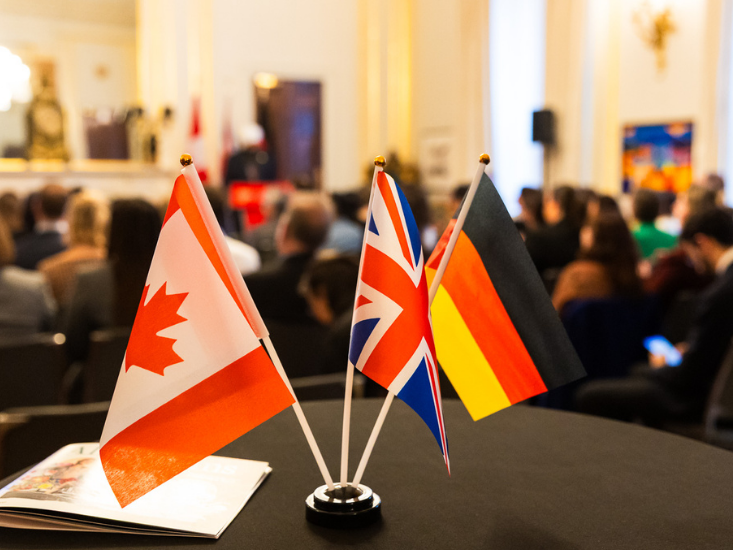
On COP29’s Gender Day, we highlight funders whose climate finance is reaching Global South WROs and feminist movements. The Government of Canada has partnered with the Global Alliance for Green and Gender Action (https://gaggaalliance.org/) to provide financial and technical support to women-led, community-based organizations to address gender inequality and support climate action. In an upcoming pilot, the UK government will partner with the Equality Fund to resource the Doria Feminist Fund (https://www.doriafeministfund.org/) and other local organizations to support climate, gender equality, and social inclusion initiatives of WROs in the Middle East and North Africa. It will also support the participation of women in decision-making spaces to influence the climate justice agenda.
Next steps for funders
Funding our Future offers tangible actions for funders that relate specifically to the COP29 agenda:
- Financing that meets the magnitude of the climate crisis, including increasing the total amount of climate finance and increasing the proportion of climate-related ODA that serves gender equality objectives.
- Funding that reaches grassroots WROs, either directly or, where not possible, through feminist funds. Embedded in the movements they serve, feminist funds can reach a range of organizations working at different levels (local, regional, national) and issues.
- Deepened collaboration with feminist climate activists in climate finance discussions and decisions.
COP negotiations are complex and meeting the magnitude of the climate crisis is challenging. But many solutions are underway, including at the intersection of gender equality and climate action. On COP29’s Gender Day, we point to the possibilities for resourcing this work, and the signs of progress. Make sure to check out Equality Fund and Mama Cash’s brief: Funding our Future: Resourcing the feminist movements driving climate action